The Download: the agentic web arrives and the drive for safer roads
Artificial Intelligence · November 4, 2026
No data team would load an unvalidated table into a production warehouse.
Yet many teams push AI-generated text, including translations, straight into products, contracts, and support flows with no quality score attached.
The reason is simple.
A single AI output looks equally confident whether it is right or wrong.
There is no null value, no failed schema check, no anomaly flag.
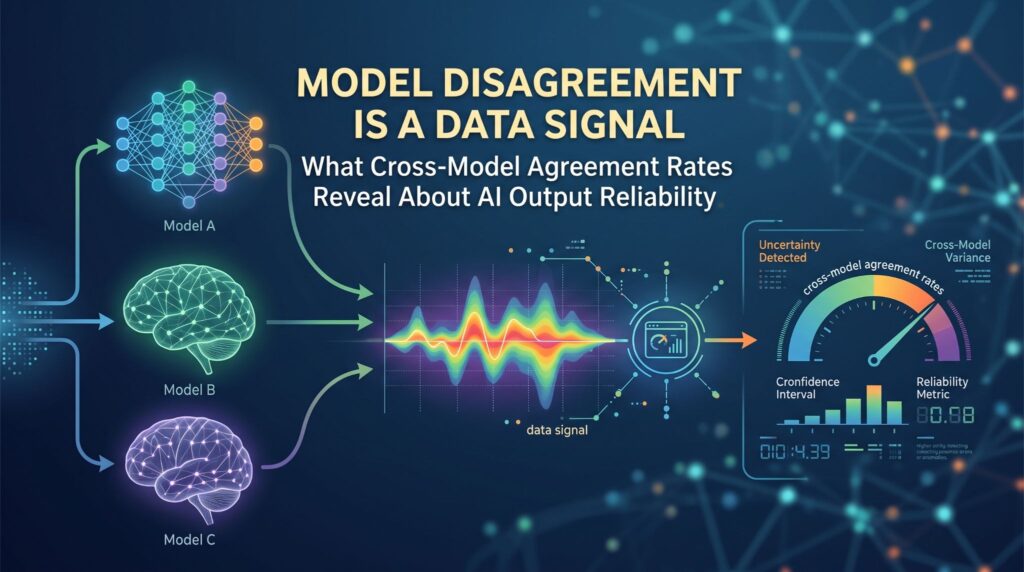
My argument is that the most practical reliability metric for AI output already exists, and most pipelines throw it away: the rate at which independent models agree.
Below is what three months of agreement data across our ten highest-volume language pairs at MachineTranslation.com shows, where the signal breaks down, and how to turn it into a triage rule you can log and audit.
Key Takeaways A single AI output carries no information about its own reliability.
Disagreement across independent models does.Across MachineTranslation.com’s ten busiest language pairs, average model agreement ranged from 83.6% to 91.9% over three months.Agreement did not follow language resourcing: English to Spanish, one of the best-resourced pairs, ranked second to last at 83.8%.Majority agreement is not ground truth.