What changed the way professionals approach consumer protection
Politics · July 15, 2026

For years, the economy has looked K-shaped. There's new evidence that some of that divide is beginning to narrow.
Why it matters: A resilient labor market is chipping away at one dimension of the K-shaped economy, even as the wealth divide remains firmly intact.
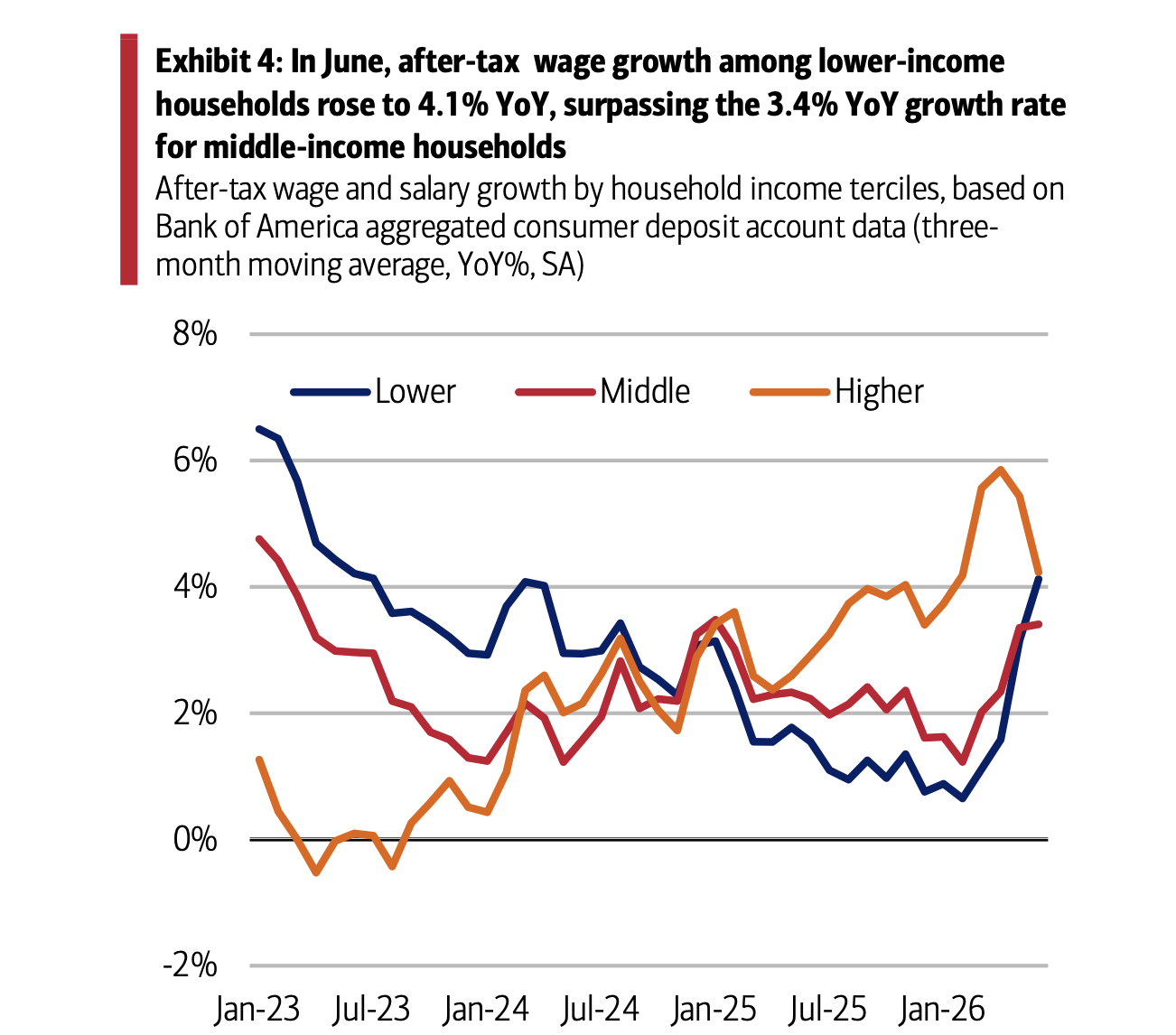 Source: Bank of America Institute
By the numbers: Bank of America Institute, drawing on anonymized customer deposit account data, estimates that lower-income households saw after-tax wage growth accelerate to 4.1% in June, up from 2.9% in May.
PNC, using its own customer data, says the spending gap between lower- and higher-income households is the smallest in three years.
The intrigue: Bank of America attributes the wage convergence to stronger hiring and job-switching among lower-income workers, while PNC says healthier labor market fundamentals are increasingly underpinning consumer spending.
The bottom line: The "K" hasn't vanished. Stocks, home equity and other gains still accrue overwhelmingly to affluent households, while lower-income workers have not felt a similar flush of wealth from the housing or stock market booms.