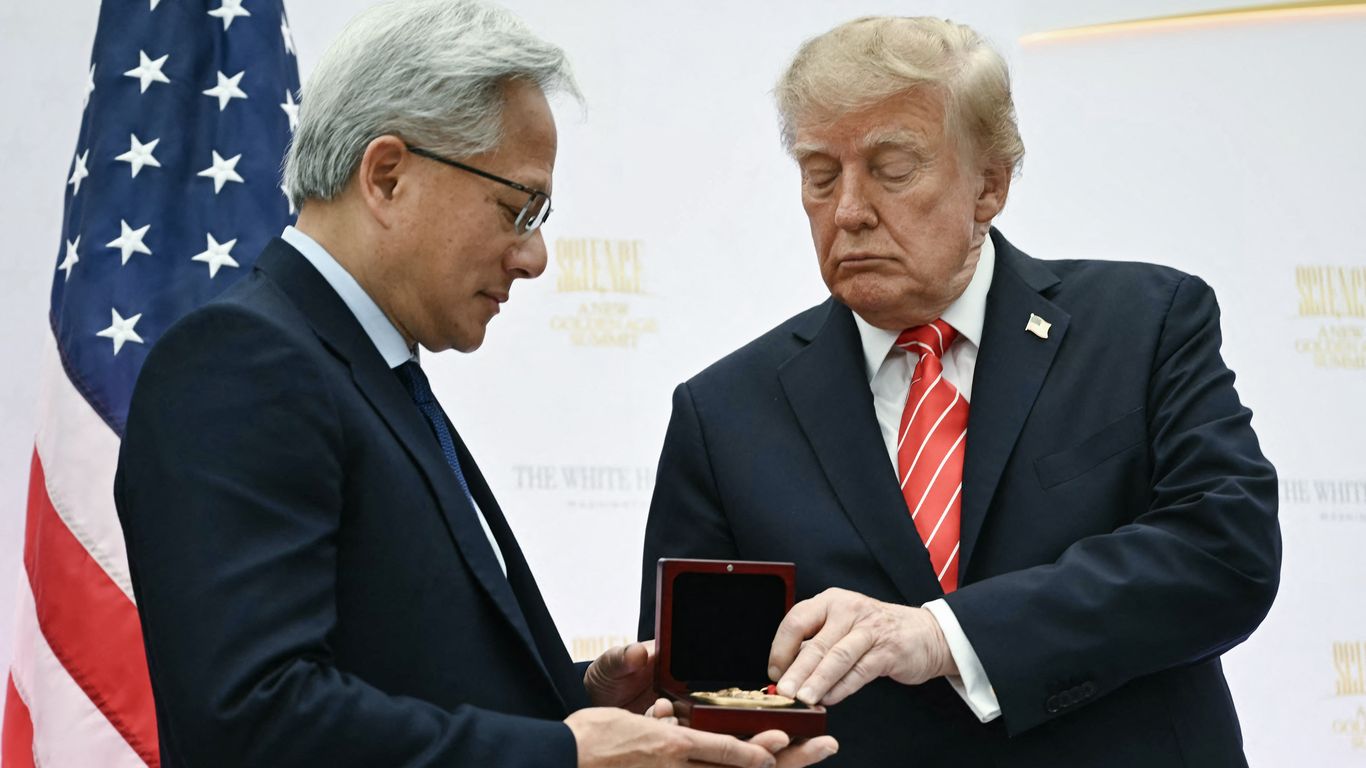
Trump backs Nvidia's Huang amid affair, spy investigation
Politics · November 9, 2026
Financial sanctions have evolved from obscure geopolitical tools into major drivers of market volatility and corporate risk. For international investors, traders, and businesses operating across borders, understanding how international restrictions function is essential for risk management. A single compliance failure can lead to frozen assets, severe regulatory fines, and reputational damage.
Navigating global compliance requires asking targeted questions about regulatory reach, target entities, and enforcement mechanisms. Below are seven fundamental questions every investor and market participant should ask when evaluating sanctions risk.
Sanctions frameworks depend entirely on the issuing authority, and jurisdiction can overlap in complex ways. In the United States, the Department of the Treasury’s Office of Foreign Assets Control (OFAC) administers and enforces economic and trade sanctions. In the United Kingdom, the Office of Financial Sanctions Implementation (OFSI) oversees compliance, while the European Union and the Australian Sanctions Office enforce their respective regimes.
Understanding jurisdiction is critical because U.S. sanctions often carry primary and secondary enforcement mechanisms. Primary sanctions apply to U.S. citizens, permanent residents, and entities incorporated under U.S. law. Secondary sanctions, however, target non-U.S. individuals or companies that engage in specific activities with designated entities, even if no direct U.S. nexus exists.
Sanctions regimes generally fall into two categories: comprehensive sanctions and list-based (targeted) sanctions. Comprehensive sanctions restrict nearly all commercial and financial activities with a specific geographic region or country. List-based sanctions target specific individuals, state-owned enterprises, private corporations, or political figures.
Investors must examine whether restrictions apply to an entire sector—such as energy, banking, or defense—or to specific entities named on government watchlists, such as OFAC’s Specially Designated Nationals (SDN) List. A company listed on the SDN List is effectively blocked from accessing the U.S. financial system, and its assets under U.S. jurisdiction are frozen.
A common pitfall in compliance involves indirect ownership. Under OFAC’s "50 Percent Rule," any entity owned 50 percent or more in the aggregate by one or more blocked persons is automatically considered blocked itself, even if that entity is not explicitly named on the SDN List.
Evaluating beneficial ownership structures requires deep due diligence. Complex corporate pyramids, offshore shell companies, and family trusts are frequently used to obscure true control. Investors analyzing global equities or private investments must look beyond surface-level corporate filings to ensure no hidden sanctioned owners exist within the ownership chain.
Sanctions do not always require a total ban on doing business. In many cases, regulatory bodies issue sectoral sanctions that restrict specific types of financial transactions or capital raising. For example, directives may prohibit U.S. persons from transacting in new debt or equity issued by designated foreign banks or corporations.
These restrictions can directly affect public equities listed on major exchanges like the NYSE or Nasdaq, as well as foreign sovereign bonds. When debt maturities or equity restrictions are imposed, secondary market liquidity often dries up quickly, leading to steep price discounts or halted trading for affected instruments.
Governments recognize that broad sanctions can cause unintended economic harm or humanitarian crises. To mitigate this, regulatory agencies issue General Licenses, which authorize specific categories of transactions that would otherwise be prohibited. Common exemptions apply to agricultural commodities, medicine, medical devices, and diplomatic operations.
Market participants must verify whether a specific transaction qualifies under an active General License or if it requires a Specific License granted on a case-by-case basis. Relying on an expired or misapplied license exposes firms to strict liability enforcement.
Enforcement agencies enforce civil liability on a strict liability basis, meaning a party can be held liable even if it did not knowingly or intentionally violate sanctions laws. Fines for civil violations can run into millions of dollars per incident, calculated based on transaction values and systemic risk factors.
Criminal violations, which involve willful non-compliance, carry severe penalties, including corporate fines exceeding hundreds of millions of dollars and prison sentences for individuals involved. Beyond direct regulatory penalties, financial institutions may lose access to correspondent banking networks, effectively shutting them out of global trade.
Sanctions regimes are dynamic and change rapidly in response to geopolitical developments. A country or sector unaffected by restrictions today could face immediate sanctions tomorrow following executive orders or international parliamentary votes. This volatility can cause sudden shifts in broad equity benchmarks like the S&P 500 or international indices as global supply chains re-route.
To manage this risk, institutions utilize automated screening systems, real-time sanctions list monitoring, and robust contractual clauses that allow for immediate divestment or contract termination if a counterparty becomes sanctioned.
Consider a hypothetical U.S. manufacturing firm that sources raw aluminum from a foreign supplier. If OFAC adds the supplier’s parent company to the SDN List due to geopolitical tensions, the U.S. manufacturer must immediately cease all payments and terminate contracts with that supplier, unless a specific transitional license is issued.
The announcement causes the global price of aluminum to spike due to supply disruption concerns. Simultaneously, institutional investors holding shares in the parent company must arrange for an orderly divestment, causing the company’s stock price to drop rapidly. This scenario illustrates how sanctions create immediate operational, legal, and market risks across global supply chains.
Sanctions represent a vital intersection between global politics and financial markets. By systematically asking these seven questions, investors and corporate managers can better assess risk exposures, protect capital, and ensure strict adherence to international laws.





Why this matters to US investors: Why this matters to US investors: U.S. sanctions laws enforced by OFAC apply strictly to all domestic individuals and corporations, and violations involving U.S. dollar transactions or domestic exchanges like the NYSE and Nasdaq carry severe strict-liability civil and criminal penalties.