Dems' rout opens door to "big test" and a packed 2028 field
Politics · November 5, 2026
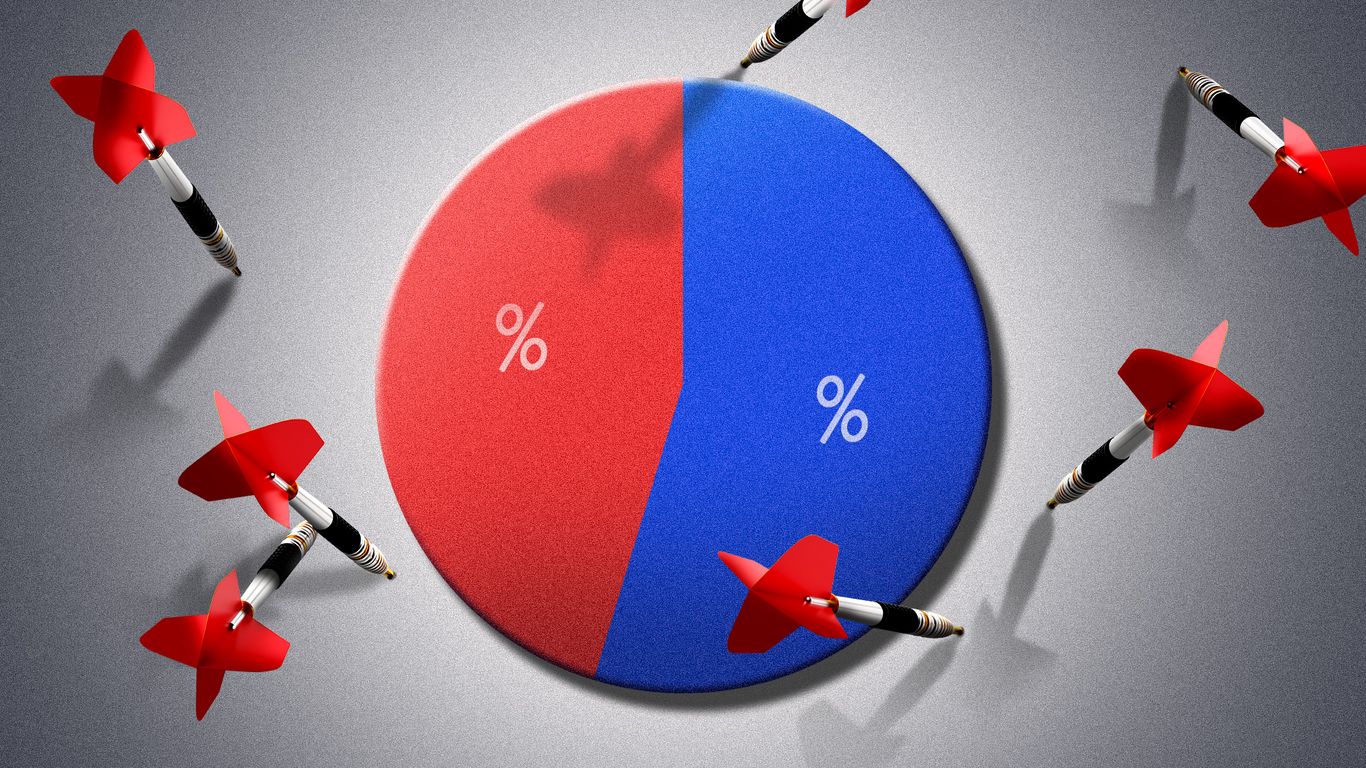
Democrats' midterm tsunami obscured a major polling miss: Surveys correctly anticipated a blue wave, but failed to capture its full force.Why it matters: Pollsters appear to have underestimated Democrats by a wider margin than they underestimated Republicans in 2016 or 2024 — even if they got the headline outcome right this time.By the numbers: Democrats are on track to win the national House popular vote by roughly 13 points, compared with a final Silver Bulletin polling average of 8.9 points, according to an initial analysis by The Argument's Lakshya Jain.That roughly 4-point gap is similar to the 2020 polling miss that underestimated Republicans and larger than the average partisan errors in 2016 and 2024, though comparisons to presidential years are imperfect.The big picture: Pollsters entered the 2026 midterms having underrated Trump's support in three consecutive presidential elections.
Their central challenge was accounting for Republican voters who might be missing from their surveys.Many polling organizations have sought to compensate by weighting results based on party affiliation or how respondents voted in previous elections.