

Forex Trade Management – What to do After You Enter a Trade
Forex · July 15, 2026

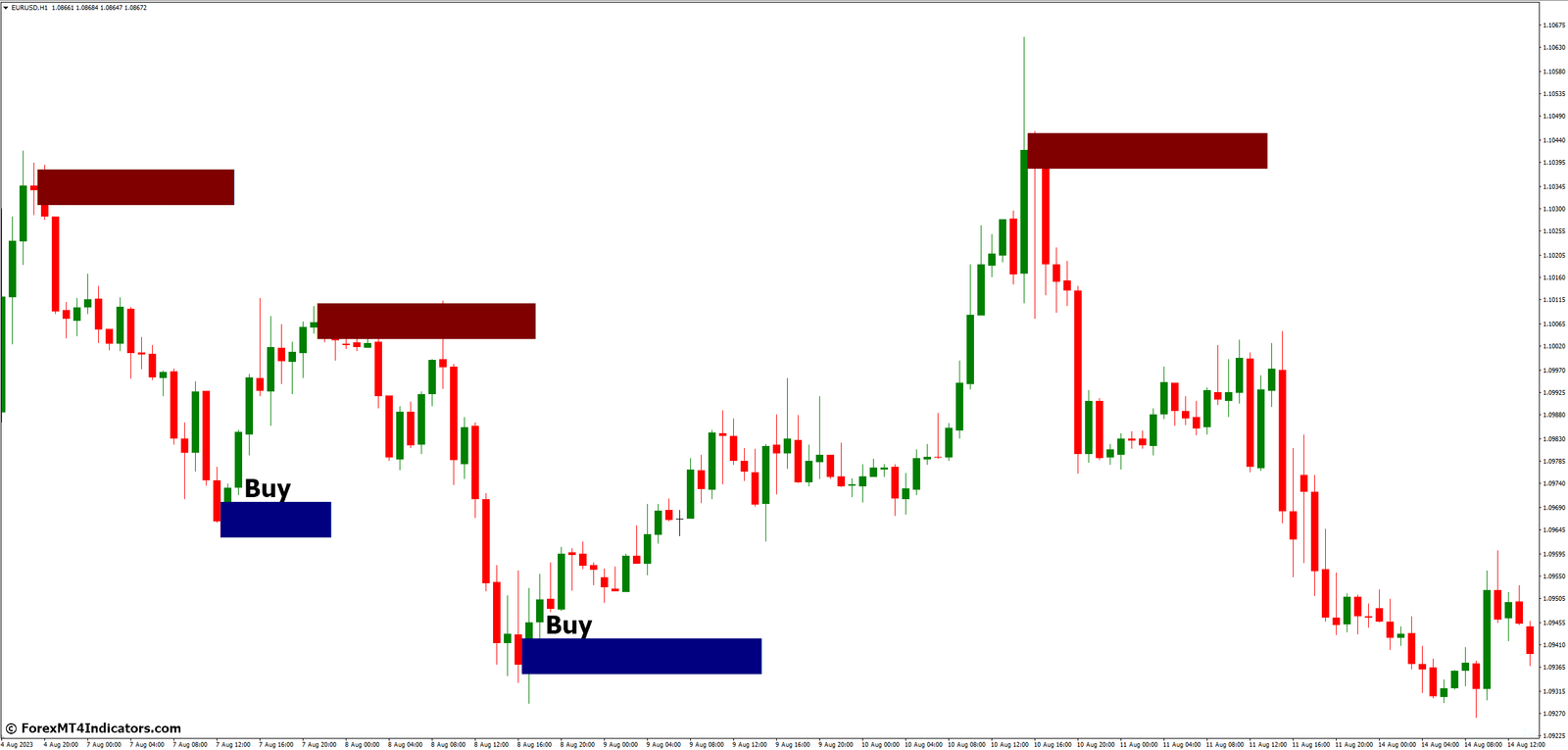
The Breaker Block Indicator MT4 is a technical analysis tool designed to identify breaker blocks, a concept widely used in institutional trading and smart money strategies.
A breaker block forms when price breaks a previous support or resistance structure and then returns to that zone. This previous level often flips its role. A broken resistance can become support, and a broken support may act as resistance.
The indicator scans historical price data to detect these structural breaks. Once a breaker block is confirmed, it draws a highlighted zone on the chart. Traders then watch how price behaves when it revisits that area.
Unlike traditional support and resistance lines, breaker blocks focus on market structure shifts, which gives traders additional context about potential liquidity and order flow.
For example, a trader analyzing EUR/USD on the 1-hour chart might see price break a strong resistance level around 1.0950. If the market later retraces to that zone and the indicator marks it as a breaker block, it may act as a support level for a continuation move.
The logic behind the Breaker Block Indicator MT4 is based on a simple but powerful principle: when market structure changes, previous price zones often become new decision points.
The indicator typically identifies breaker blocks using the following steps:
In practice, the indicator works best when combined with price action analysis.
Consider GBP/USD on the 15-minute chart during the London session. Suppose price breaks a strong intraday support level at 1.2720, creating a new lower low. The indicator then marks the previous consolidation zone as a breaker block.
Later, when price retraces to 1.2720–1.2730, traders often watch for bearish signals such as rejection candles or lower-timeframe structure breaks before entering a short trade.
This approach helps traders avoid chasing price during impulsive moves and instead wait for higher-probability retests.
The Breaker Block Indicator MT4 is mainly used for trend continuation entries and reversal setups.
One common strategy is the breaker block retest trade.
Imagine USD/JPY trending upward on the 4-hour chart. Price breaks above resistance at 148.50, forming a clear bullish structure. The indicator highlights the breakout zone as a breaker block.
Instead of buying immediately, some traders wait for price to pull back into that area. If the market shows bullish rejection—such as a pin bar or engulfing candle—they may enter a buy trade around 148.60 with a stop loss below the zone.
This method often produces better risk-to-reward ratios compared to entering after a strong breakout.
Another scenario appears during high-impact news events. When testing the indicator during volatile NFP days, many traders notice that price frequently spikes through key levels and then returns to breaker zones before the real move begins.
That said, traders must stay cautious during extreme volatility because sudden liquidity moves can temporarily invalidate technical levels.

Most versions of the Breaker Block Indicator MT4 include adjustable parameters that allow traders to adapt it to different strategies.
Common settings include:
Lookback period: This defines how far the indicator scans historical candles to detect structure breaks. A higher value helps identify larger market zones, while a lower value highlights shorter-term opportunities.
Minimum breakout distance: Some versions allow traders to set a minimum number of pips required to confirm a breakout. For example, setting it to 15–20 pips on major pairs can reduce false signals.
Zone visualization settings: Users can adjust colors, transparency, and box thickness to make breaker blocks easier to identify during fast trading sessions.
Many traders prefer using the indicator on 15-minute, 1-hour, and 4-hour charts. Lower timeframes tend to produce more signals, but they also generate more market noise.
Major currency pairs like EUR/USD, GBP/USD, and USD/JPY often provide clearer breaker block reactions due to higher liquidity.
Like any technical tool, the Breaker Block Indicator MT4 has strengths and weaknesses.
One clear advantage is its focus on market structure rather than simple price averages. This helps traders align their entries with areas where institutional activity may occur.
Another benefit is the clarity it brings to charts. Instead of drawing support and resistance manually, the indicator highlights important zones automatically.
But the tool isn’t perfect.
Sometimes the indicator marks zones that price never revisits. In trending markets, price may continue moving without providing a retest opportunity.
It can also produce weaker signals during ranging conditions. When the market is stuck in tight consolidation, structure breaks may occur frequently and create confusing zones.
Some traders compare breaker blocks with supply and demand indicators or order block tools. While the concepts overlap, breaker blocks specifically emphasize structure flips after breakouts, which gives them a slightly different perspective on market behavior.
Because of this, many experienced traders combine the indicator with tools like moving averages, RSI divergence, or simple price action patterns.
And one thing must always be remembered:
Trading forex carries substantial risk. No indicator guarantees profits. Proper risk management is essential.

The Breaker Block Indicator MT4 offers a practical way to identify key market structure zones where price often reacts. For traders who rely on price action and institutional concepts, it can provide useful context when planning entries.
Key takeaways include the indicator’s ability to highlight structure shifts after breakouts, its usefulness for waiting on pullbacks rather than chasing price, and the importance of combining it with other analysis methods. It also works best on liquid pairs and higher timeframes where structure is clearer, though traders should stay cautious during extremely volatile sessions.
While the Breaker Block Indicator MT4 can help traders locate potential support and resistance flips, it should be treated as a decision-support tool rather than a standalone strategy. Testing it on a demo account and observing how price reacts to breaker zones is often the best first step before applying it to live trading.

Already an XM client but missing out on cashback? Open New Real Account and Enter this Partner Code: VIP90
Enter Your Email Address below, download link will be sent to you.
Get Download Link

