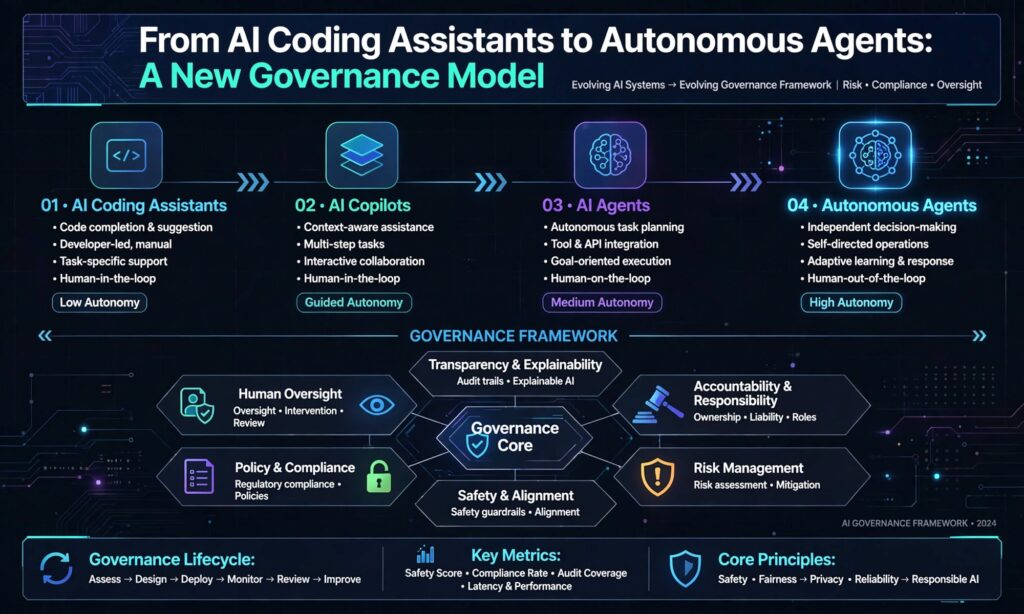
From AI Coding Assistants to Autonomous Agents: A New Governance Model
Artificial Intelligence · November 1, 2026
Listen to this article 15 1x 0:00 12:47 The quarterly infrastructure bill comes in at nearly four times the forecast.
An AI agent has been retrying failed tasks and consuming resources within the permissions and spending limits it was given.
Elsewhere, an agent runs a workflow outside its approved scope, or the wrong employee sees data they shouldn’t.
The executive sponsor gets the same question every time: How did this happen?
The agent may have followed its instructions and used the permissions it was given.
It simply operated inside a system that allowed the wrong outcome.
When that happens, the failure lies in how the organization defined and governed the agent’s boundaries.
And it’s more common than many organizations expect.
Gartner predicts that more than 40% of agentic AI projects will be canceled by the end of 2027, driven by escalating costs, unclear business value, or inadequate risk controls.
These problems become visible in production, but they begin with decisions made before deployment.
Guardrails are how leaders define acceptable agent behavior before an incident defines it for them.
AI guardrails are policy-level controls that define what an agent can access, generate, and do at runtime.